

Fishing yesterday, today, tomorrow
The fisheries
Zees boats and fishing trawlers
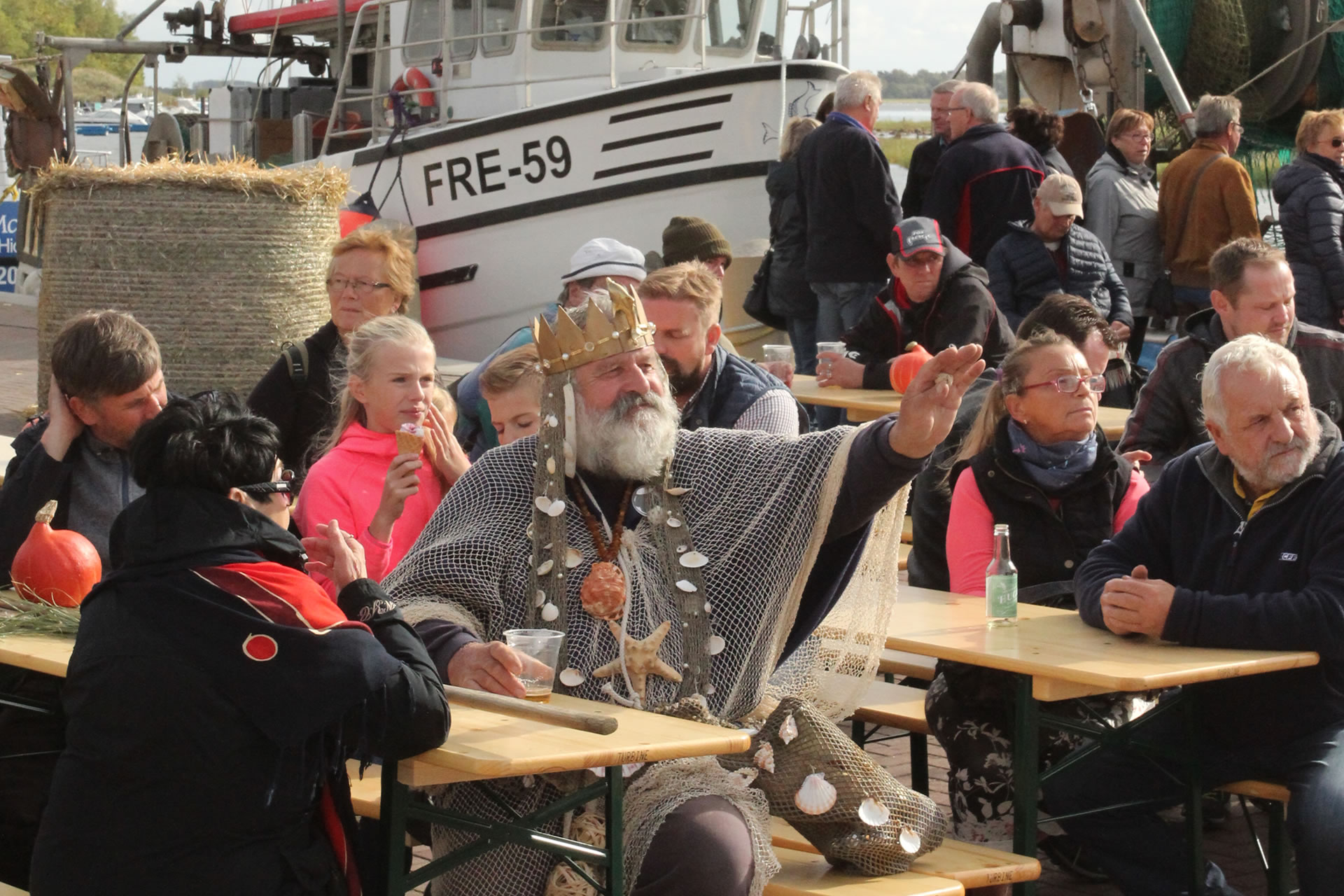
When the wind inflates the characteristic brown sails, they glide silently over the bay, the Zees boats, the traditional fishing boat for coastal fishing on the coast of Mecklenburg-West Pomerania. Long spars protrude at the bow and stern, to which drift nets for herring are attached. The Zeesen fishing tradition is many hundreds of years old. Back then, life as a fisherman was even tougher than it is today. For up to six days, the fishermen were drifting across the lake and dragging the wide-open net behind the spars attached to the bow and stern. The hold was flooded for the fish to give the boat stability and keep the catch fresh. Every year there is still a Zees boat regatta on the bay of Bodstedt with the traditional iron boats. A counterpart to the Zees boats and the fishing method used to exist with the Venetian fishermen. The boats in Italy have now completely disappeared from the scene. The gondolas in Venice are considered their successors. Nowadays, they are no longer used to catch fish, but tourists.
There were no more private fishermen in the GDR. These were brought together in production cooperatives for the skilled trades (PGH), which in turn were organized in the three state-owned combinations in Rostock, Sassnitz and Wismar. After the war, it was primarily hunger and the lack of ocean-going ships in the Baltic Sea that would have been suitable for landing catches that would have been sufficient to supply the population. So, the focus was on the construction and operation of ocean-going loggers, which trawl larger quantities of herring, which were processed in so-called “Loggerein”. In the 1950s, these were replaced by steel side trawlers, fishing ships that went to Iceland, Canada or Mozambique, stayed at sea for several months and handed over their catch to processing ships at sea.
Fishing today
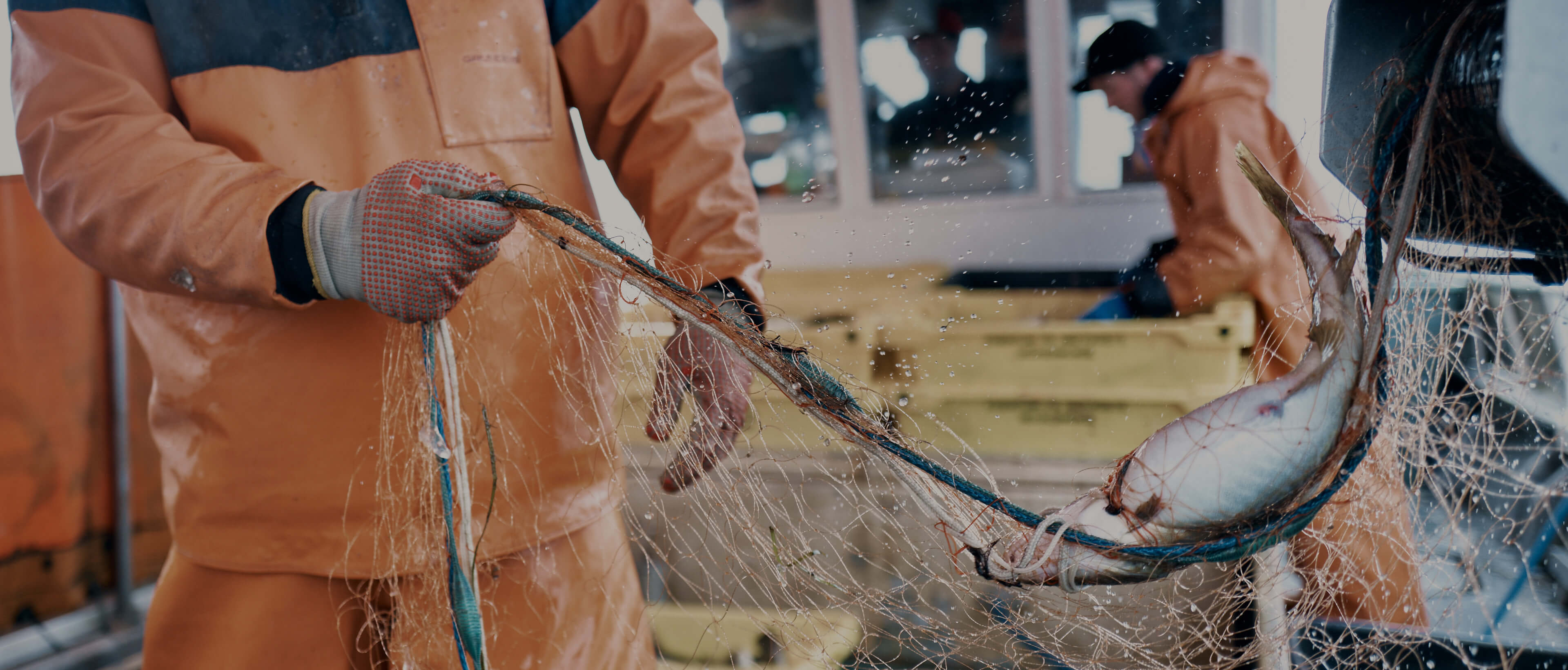
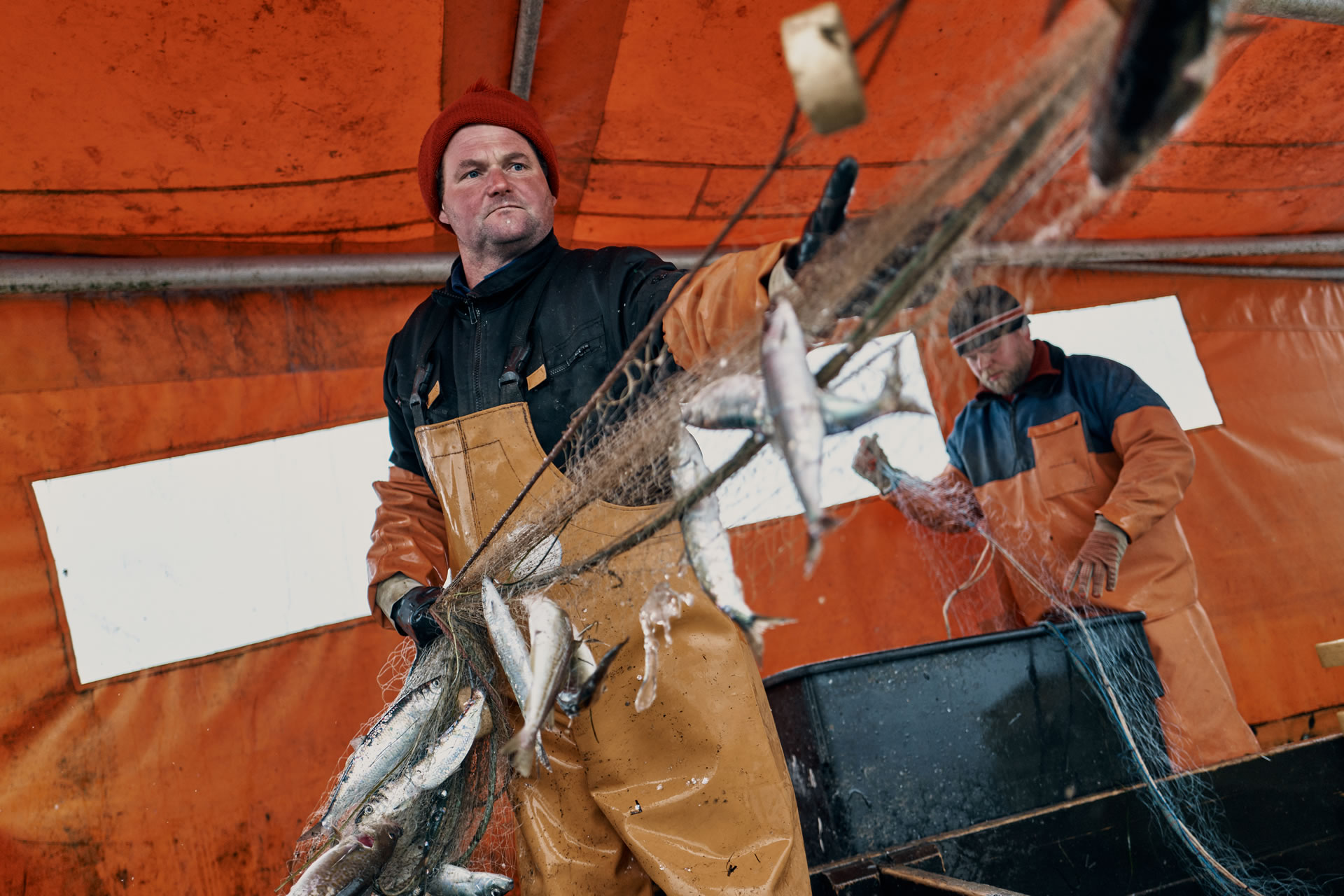
After reunification, the fishermen had the opportunity to continue to organize themselves in cooperatives. However, the quest for independence and connection to old family traditions were generally stronger. Most of them decided against it, went into business for themselves and around 1800 fisheries were founded. They caught around 80,000 tons of herring and 15,000 to 20,000 tons of cod annually. Today there are still 180 companies - and the trend is declining. The reasons for this are varied and are the subject of numerous economic and environmental policy discussions.
The entire responsibility for fisheries issues no longer lies in Germany, but with the EU Commission, which makes its decisions about the International Council for the Exploration of the Sea (ICES), a team of scientists, including: the Thünen Institute for Baltic Sea Fisheries or the Leibniz Institute for Baltic Sea research in Warnemünde and confirms this with research data. The herring quota was thus reduced to 6000 tons, that of cod to 3000 tons. Herring takes four years to grow and cod takes six years to produce good spawning. So long can no fisherman, who has to take out loans for boats and equipment, moor his boat in the port.
The future of fishing - agents of the sea
The fisherman used to be a hunter. Since the Fishfinder tool was launched, the healthy relationship between the hunter and the hunted, fisherman and fish to the disadvantage of fish has undoubtedly shifted. In order to protect the stocks, according to scientific knowledge, herring fishing would have to be stopped by the end of 2021 (in the longer term). That would undoubtedly mean the end for cutter and inshore fishing, for the people working hard in this segment and for a long family tradition.
In order to do justice to the environment and people alike, various models have been developed to preserve the livelihood of fishermen. Direct marketing plays a central role in the considerations to save this traditional profession. The first successes of the change from the image of the fisherman in the south-west with a full beard and pipe, who gazes at the sunset in reminiscence of the good old days, towards a smart multi-talent, have been accomplished. In the meantime, there are some companies on the coast that smoke themselves and, in addition to selling over the “edge” of the cutter, offer their fish in their own restaurants, cutter pubs, shops or factories. The combination of several fisheries into cooperatives has proven to be particularly efficient for this purpose. They pursue integrative concepts and, in addition to the pure sale of the fish, offer accommodation, fishing trips and trips on cutters or equipment in fishing shops.
The possibilities of maintaining the fishing profession as well as the fish stocks in the Baltic Sea are far from exhausted. Trend-setting concepts in Norway, Japan and the USA are examining the possibilities of managing wild stocks in the open sea and using the accumulated knowledge of fishermen that has been passed on from generation to generation for thousands of years. This valuable knowledge of people who have spent their lives at sea and with fish is supplemented by a new, interdisciplinary generation of fishermen for research. The constantly changing framework conditions for fish stocks, shipping routes, wind farms, global warming, eutrophication of the sea and much more can change. be better monitored.
In practical terms, this means that fishermen lease fishing areas and manage and maintain their own stocks and develop them in accordance with economic and ecological premises. In breeding stations on the coast, one dedicates itself to the young fish. The animals brought into the natural stock will later be chipped, i.e. identified with small microchips. If they are caught, the chip is read out, and the animal passport on it allows conclusions to be drawn about the growth and migration behaviour of the fish and the necessary measures can be taken if necessary.
This paradigm shift currently appears to be the most sensible path to future knowledge-based fishing. The salvation of the oceans, fish stocks and a profession that lives from and with the sea are then the highest commandments that would no longer be viewed in isolation. The future of fishing will not only set the course for the fate of a single profession. It is about the preservation of the Baltic Sea ecosystem, a biosphere in which nature and people, fish and fishermen, consumers and industry are at home, depending on their existence.
News / Events
Testbeitrag B
Überall dieselbe alte Leier. Das Layout ist fertig, der Text lässt auf sich warten. Damit das Layout nun nicht nackt im Raume steht und sich klein und leer vorkommt, springe ich ein: der Blindtext.
Read more … Testbeitrag BTestbeitrag A
Überall dieselbe alte Leier. Das Layout ist fertig, der Text lässt auf sich warten. Damit das Layout nun nicht nackt im Raume steht und sich klein und leer vorkommt, springe ich ein: der Blindtext. Genau zu diesem Zwecke erschaffen, immer im Schatten meines großen Bruders »Lorem Ipsum«, freue ich mich jedes Mal, wenn Sie ein paar Zeilen lesen.
Read more … Testbeitrag ADownloads
Contact
Landesverband der Kutter- und Küstenfischer Mecklenburg-Vorpommern e.V.
Executive Chairwoman Ms. Ilona Schreiber
Alter Holzhafen 1
23966 Wismar
Telefon: +49 3841 282565
Telefax: +49 3841 2250911
E-Mail: lvkk-mv@gmx.de